
Why Can’t I Stop Thinking About My Birth Experience?
Why your birth experience may still be on your mind?
If you keep asking yourself, “Why can’t I stop thinking about my birth experience?”, please know that you are not being dramatic or weak. Birth is not only a medical event. It is a huge life event that can impact your thoughts, emotions, hormones, and physical well-being. For some people, the memory of birth feels joyful or empowering. For others, it feels confusing, infuriating, frightening, disappointing, painful, or unfinished.
It is common to mentally replay a major life event, especially when it happened quickly, felt out of your control, involved pain or fear, or did not match what you expected. Your mind may be trying to make sense of what happened, fill in missing pieces, or protect you from future danger. However, when the thoughts feel intrusive, distressing, or impossible to switch off, they may be a sign that your nervous system is still processing the experience.
A note of reassurance: Thinking about your birth again and again does not automatically mean you have post-traumatic stress disorder. But if the memories are distressing, persistent, or interfering with sleep, bonding, relationships, or daily life, you deserve support from a licensed perinatal mental health professional.
Birth trauma is often described as physical or emotional distress connected to childbirth. Cleveland Clinic defines birth trauma as emotional distress or physical pain that can occur before, during, or after childbirth, and notes that it may affect quality of life for months or years if support is not received.1
The short answer: your brain may be trying to process something intense without the proper tools to do so.
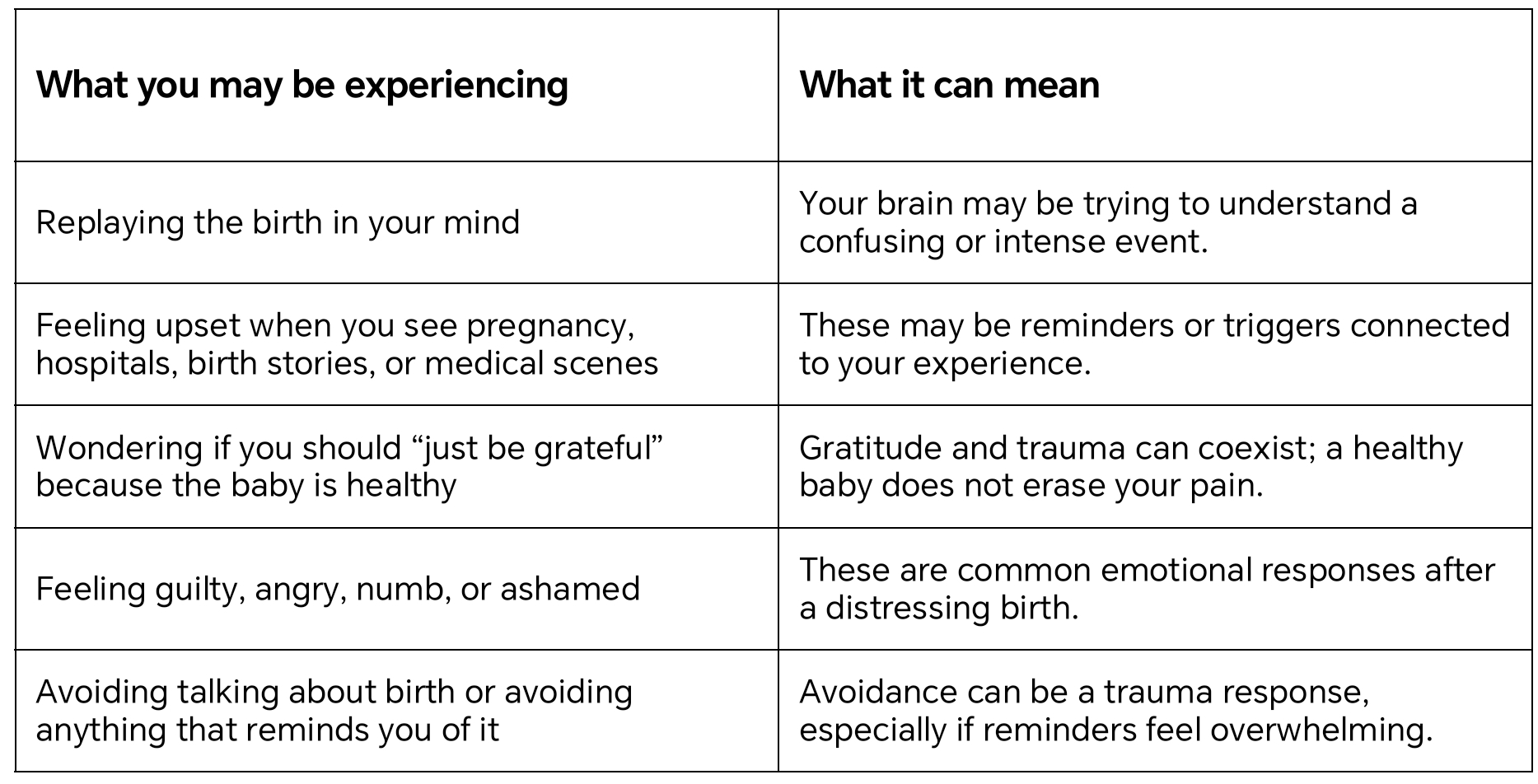
After a difficult or overwhelming birth, repeated thoughts can be part of the brain’s attempt to make sense of what happened. You may replay conversations with providers, wonder whether something could have gone differently, or feel stuck on the moment when plans changed. Repeated thoughts may pop up during times you least expect it, like right before bed, while taking a shower, or when there are quiet moments throughout the day. This can happen after an emergency, a long labor, an unplanned caesarean birth, a NICU admission, severe pain, heavy bleeding, a tear, a sense of being ignored, or simply feeling powerless in the birthing experience.
The South Yorkshire and Bassetlaw Healthier Together NHS resource on this exact concern explains that people may find themselves constantly going over what happened while the body heals and the mind tries to make sense of the birth experience.3 In other words, your mind may be reviewing the event because it has not yet been fully integrated as a past memory.
Why do some birth memories become intrusive?
A birth experience can become difficult to stop thinking about when it was filed into the brain’s memory network as threatening, overwhelming, or unresolved. During perceived danger, the body’s stress response can become highly activated. Instead of storing the memory like an ordinary story with a beginning, middle, and end, then forgetting about it. The brain holds fragments of what happened: the sound of a monitor, a provider’s tone of voice, a bright operating room, a moment of panic, or the feeling that no one was listening. This is why birth memories may return suddenly, even when you are not trying to think about them.
Was my birth “traumatic enough” to count?
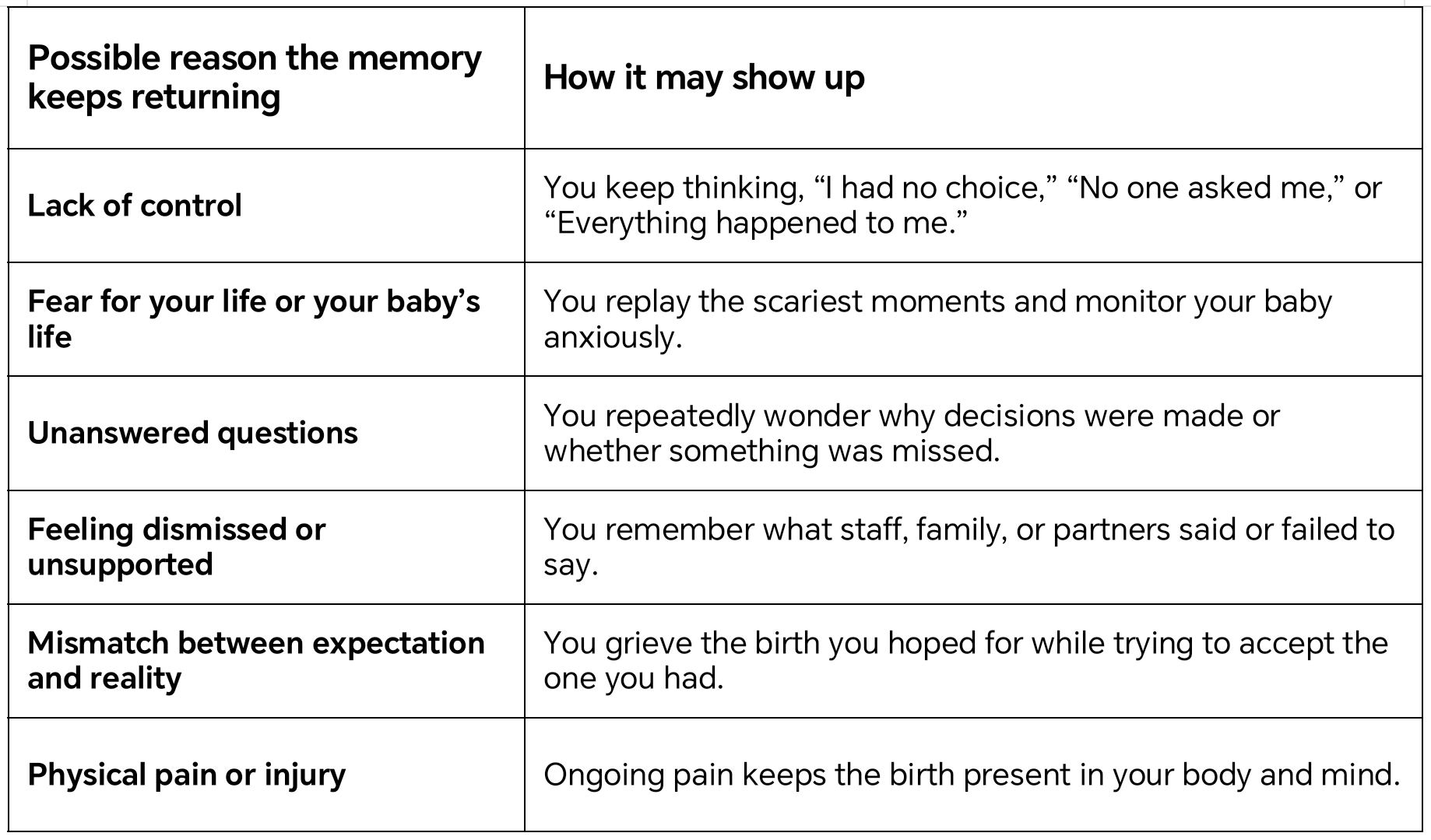
Many parents minimize their experience because they believe trauma only “counts” if something catastrophic happened or if loss was involved. But trauma is not defined only by the medical facts of the birth. It is also shaped by how safe, informed, respected, and supported you felt.
March of Dimes explains that birth trauma can involve physical or emotional distress during or after childbirth, and that people may feel afraid, helpless, unsupported, guilty, numb, or experience panic attacks.4 Cleveland Clinic also notes that emotional birth trauma can occur when a baby needs urgent medical attention, when the birthing parent does not feel supported, when they feel they had no control, or when the experience was not what they hoped for.1
This matters because two people can have similar medical events and very different emotional outcomes. One person may experience an emergency c-section as frightening but manageable because they felt informed and supported. Another may experience the same event as traumatic because they felt ignored, coerced, alone, or terrified.
Your feelings are valid even if someone else says, “At least everyone is okay.” You can be grateful your baby is here and still feel hurt by what happened. Both can exist at the same time.
Signs it may be birth trauma or postpartum PTSD
Not everyone who keeps thinking about birth has PTSD. Still, repeated intrusive memories can be one part of a bigger pattern. Postpartum PTSD, sometimes called postnatal PTSD or childbirth-related PTSD, can occur after a traumatic birth experience. The American Psychiatric Association describes symptoms of birth-related PTSD as including intrusive involuntary thoughts and memories, avoidance of trauma reminders, changes in arousal and reactivity, and difficulty sleeping.5
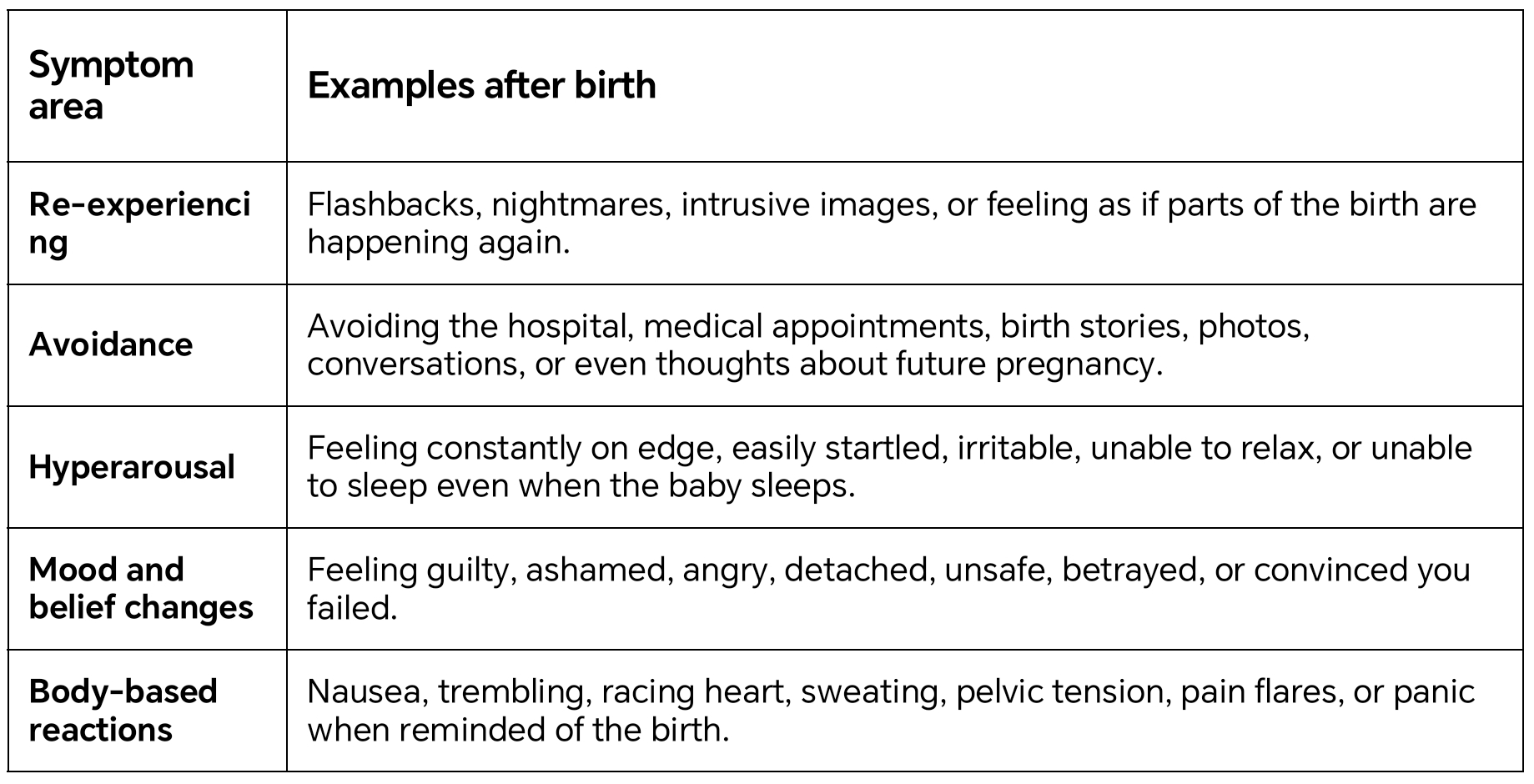
You may also notice changes in bonding, intimacy, feeding, trust in healthcare providers, or your sense of identity. Some people feel emotionally numb. Others feel intensely protective of the baby. Some avoid looking at birth photos or reading hospital notes. Others become consumed by researching what happened.
Why you might feel angry, guilty, or ashamed
After a distressing birth, the mind often looks for someone to blame. Sometimes blame is directed outward: toward providers, systems, partners, family members, or circumstances. Sometimes it turns inward: “I should have spoken up,” “My body failed,” “I made the wrong decision,” or “I should have known.”
Self-blame is common after trauma, but it is not always truthful. Birth unfolds under intense physical pressure, limited information, and often rapidly changing medical circumstances. You made the best decisions you could with the information, support, and options available at the time. Processing any guilt or shame is best done alongside a licensed perinatal mental health professional who is trauma-informed.
Common triggers that can bring the birth back
Triggers are reminders that bring the memory or emotional state of the birth into the present. They are not always obvious. A trigger may be a hospital smell, a baby monitor beep, a cervical check, a scar, a postpartum appointment, a friend’s birth announcement, a social media birth video, or your baby reaching a milestone that reminds you of the early days.
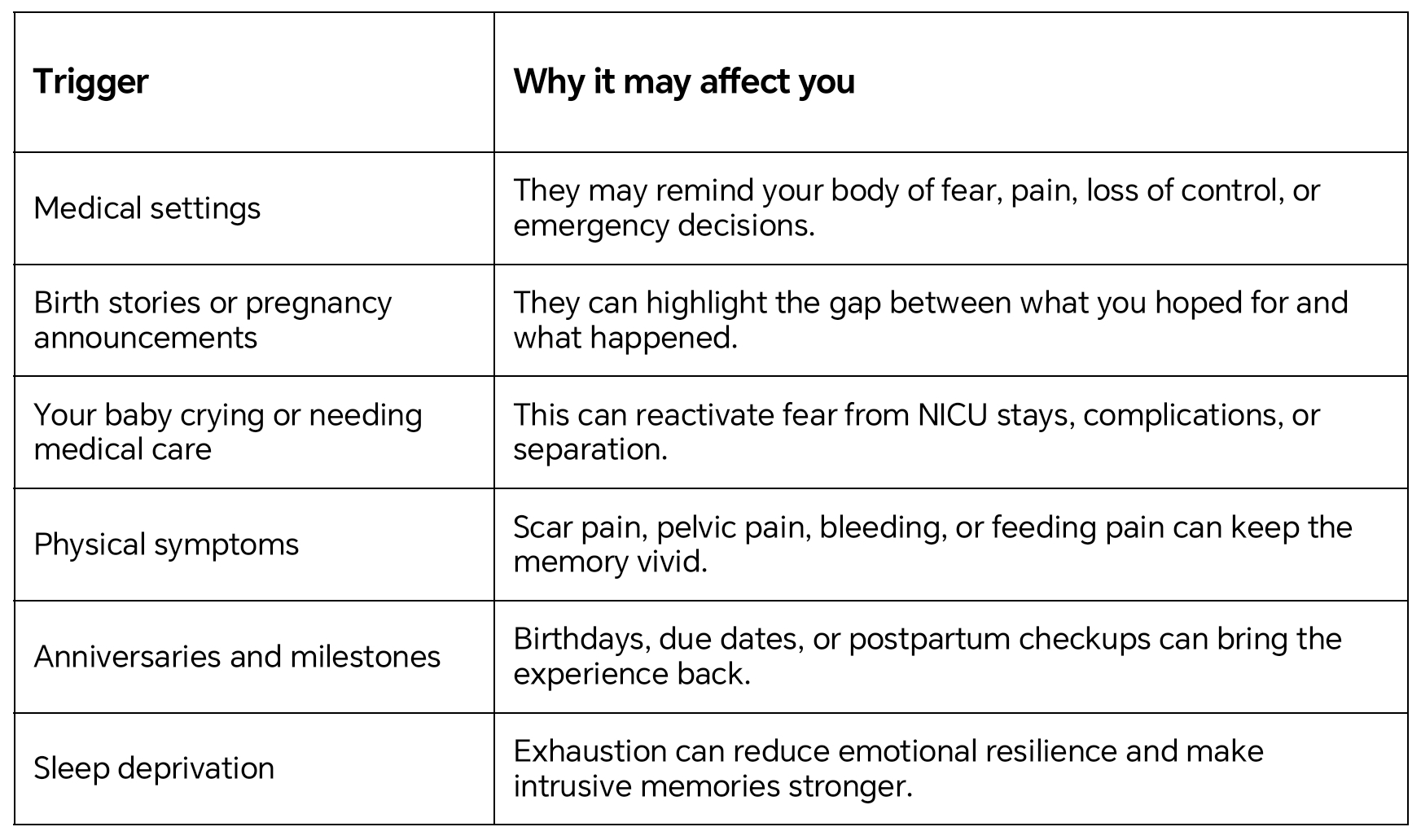
Understanding triggers can help you respond with compassion rather than fear. A trigger does not mean you are “back at the beginning.” It means your brain has found a reminder between now and then.
What can help when you can’t stop replaying your birth?
Healing from a difficult birth is not about forcing yourself to forget. It is about helping your mind and body understand that the event is over, that you are allowed to have feelings about it, and that support is available.
1. Name what happened without minimizing it
Try replacing “I should be over this” with “Something about that experience still feels unresolved.” You do not need to decide immediately whether the word trauma fits for your experience. You can simply begin by acknowledging that the birth affected you.
2. Use grounding when memories feel present
When a memory feels like it is happening again, grounding techniques can help orient your body to the present. You might name five things you see, press your feet into the floor, hold something cold, slow your breathing, or say out loud, “That was then. I am here now.” These practices do not erase trauma, but they can reduce the intensity of the intrusive thoughts in the moment.
3. Talk to a perinatal mental health professional
If birth memories are intrusive, distressing, or affecting daily life, professional support can be very helpful. EMDR has been shown to be effective in treating childbirth related PTSD. Postpartum Support International also emphasizes that perinatal mental health conditions are treatable and that people do not need a diagnosis to reach out for help.6
4. Consider support groups or peer support
If you’ve had a hard start into motherhood, speaking with others who understand difficult experiences can reduce isolation. A good support space should not pressure you to retell details before you are ready. It should help you feel believed, grounded, and less alone.
5. Let trusted people know what helps and what does not
Loved ones often want to help but may say the wrong thing. You may need to be clear: “Please don’t tell me to focus only on the baby,” or “I need you to listen without fixing it.” Partners may also be affected by traumatic birth, especially if they witnessed fear, emergencies, or separation.
Can you heal from a difficult birth experience?
Yes. Healing does not mean pretending the birth was fine. It means the memory becomes less sharp, less consuming, and less powerful over your present life. With time, support, and sometimes trauma-focused therapy, many people are able to remember the birth without feeling pulled back into the fear of it. There story feels integrated rather than fragmented.
You may still feel sadness about what happened. You may still wish things had been different. But the experience can become one chapter of your story rather than the whole story.
Final thoughts
If you cannot stop thinking about your birth experience, your mind may be asking for care, not criticism. You are allowed to feel grateful and grieving, relieved and angry, loving and shaken. Birth can be beautiful, but it can also be scary, painful, and complicated. Your story and experience matters. You do not have to go through this alone. You do not have to prove that your experience was “bad enough” to deserve support. If it still hurts, it matters. If the memories keep returning, there are people trained to help. Healing is possible.
___________________________________________________________________________
References
https://my.clevelandclinic.org/health/diseases/birth-trauma
https://www.marchofdimes.org/find-support/topics/postpartum/toll-birth-trauma-your-health
https://worthytolivetherapy.com/birth-trauma