

What Do You Need After a Traumatic Birth? Finding Support
You’ve Shared Your Birth Story, But You Still Don’t Feel Better. What Do You Need After a Traumatic Birth?
You’ve told your birth story. You’ve explained what happened. Maybe you’ve even shared it with other moms online, hoping someone will understand. So why does it still feel like something is missing?
Maybe you’ve found yourself typing out every detail of your birth in a Facebook group or online community. You explain what happened during labor, the unexpected interventions, the emergency C-section, the time away from your baby, or the moments when you felt scared and out of control.
And then, at the end of your post, you write something like:
“I just wanted to share, mainly for my own mental health. So I guess I’m coming here for ideas? Support? Motivation?”
You know you need something. You just aren't sure what.
The desire to share with others is one way the nervous system is trying to make sense of what was overwhelming back then.
So if you still feel stuck after sharing your birth story, here's what you may need as you begin to recover from a difficult or traumatic birth experience.
1. You May Need Someone to Genuinely Show Compassion & Validate What You Experienced
One of the hardest parts of a difficult birth can be feeling like other people don't understand why it affected you so deeply.
To feel like as a mother, we're supposed to suffer all pain and difficulties without a complaint in response to our children, but this is not true. You are human, and while you can be grateful that your baby is here, it does not erase the heartbreak you may be carrying about how your birth unfolded.
Both things can be true.
You can love your baby and still grieve the birth experience you hoped to have. You can appreciate the medical team that helped you and still feel hurt by the moments you missed or the times you felt out of control or helpless. You can recognize that things could have been worse and still acknowledge how difficult they were for you.
Sometimes, when you share your story, you aren't looking for someone to explain why everything happened the way it did.
You're looking for someone to acknowledge what it was like for you.
You may be wondering, “Am I allowed to feel this way when everyone keeps telling me that everything is fine?”
Yes. Your emotional experience deserves space, too.
2. You May Be Trying to Understand Why You Still Can't Stop Thinking About Your Birth
Maybe it's been weeks or months or years since you delivered your baby, but your mind keeps returning to certain moments. This may happen more often during the holidays, birthdays, or when you're reminded of the birth experience.
You replay the conversation with your doctor. You think about how quickly things changed. You remember the fear you felt when you realized your birth wasn't going as planned.
You may find yourself asking:
Why do I keep thinking about this?
Why do I feel afraid when I think about getting pregnant again?
Why am I still so emotional when it's already over?
Why does hearing someone else's birth story make me angry or bitter?
Why do I feel uncomfortable when people ask me about my delivery?
Why can't I remember certain parts of what happened?
When an experience has been frightening or overwhelming, it can take time to make sense of it. Some women find themselves revisiting particular moments, while others struggle to put the experience into words.
You may be trying to understand what happened, what it meant to you, or why it continues to affect you.
There isn't one explanation that applies to every woman. But if your birth experience continues to affect your emotions, relationships, sense of safety, or daily life, you don't have to dismiss those feelings or figure them out alone.
3. You May Need Help Figuring Out Where to Start
This is something many women don't talk about enough: sometimes, you recognize that you aren't feeling like yourself after birth, but you have no idea what to do about it.
You might begin by asking yourself:
What part of my birth experience feels hardest to think about?
What happens emotionally when I remember it?
What do I wish someone understood about what I went through?
What feels most difficult in my life right now?
What kind of support would feel helpful and manageable?
You don't need perfect answers. Even recognizing that you feel sad, anxious, angry, disconnected, or confused can be a meaningful starting point.
If the experience is affecting your well-being, a perinatal mental health therapist with experience in birth trauma can help you explore your needs and determine what kind of support may be appropriate.
You don't have to arrive at your first appointment knowing exactly what you want to work on.
4. You May Need Hope That You Can Feel Better
You may have quietly asked yourself, “Am I always going to feel this way?”
Perhaps you want to enjoy motherhood without constantly thinking about what happened. Maybe you want to feel more comfortable talking about your birth or accept what happened. Or perhaps you're considering another pregnancy and wish you could approach the possibility without so much fear.
You want to remember what happened without feeling as though you're right back in that moment.
You want to feel more grounded in the present, more confident in your ability to navigate difficult emotions, and more hopeful about what comes next.
For some women, connection and peer support are helpful. Others may benefit from working with a therapist who understands birth trauma. Depending on your needs, therapy may involve processing the experience, addressing anxiety, strengthening your sense of safety, or exploring approaches such as EMDR.
There is no single path that every woman must follow.
So, What Do You Actually Need After a Difficult or Traumatic Birth?
If you've been sharing your birth story and still don't feel better, consider this:
Maybe you need validation. Maybe you need someone to listen. Maybe you want to understand why certain memories continue to affect you. Perhaps you need connection, practical guidance, or reassurance that things can change.
You may need a combination of these things, and your needs may change over time.
You don't have to label your birth as traumatic to acknowledge that it affected you. You don't have to prove that your experience was bad enough. And you don't have to wait until you're struggling to get through the day before you seek support.
You can ask for help simply because you want to feel better than you do right now.
If you're unsure where to begin, start by giving yourself permission to acknowledge what you're feeling without judging yourself for it.
You don't have to rush toward a solution. You can take the time to understand what happened, how you're feeling now, and what kind of support would be most helpful.
You deserve that care, too.
What are the next steps?
If you're a mom in Maryland who continues to replay her birth, feels anxious when thinking about what happened, or is struggling to make sense of her experience, you don't have to navigate those feelings alone.
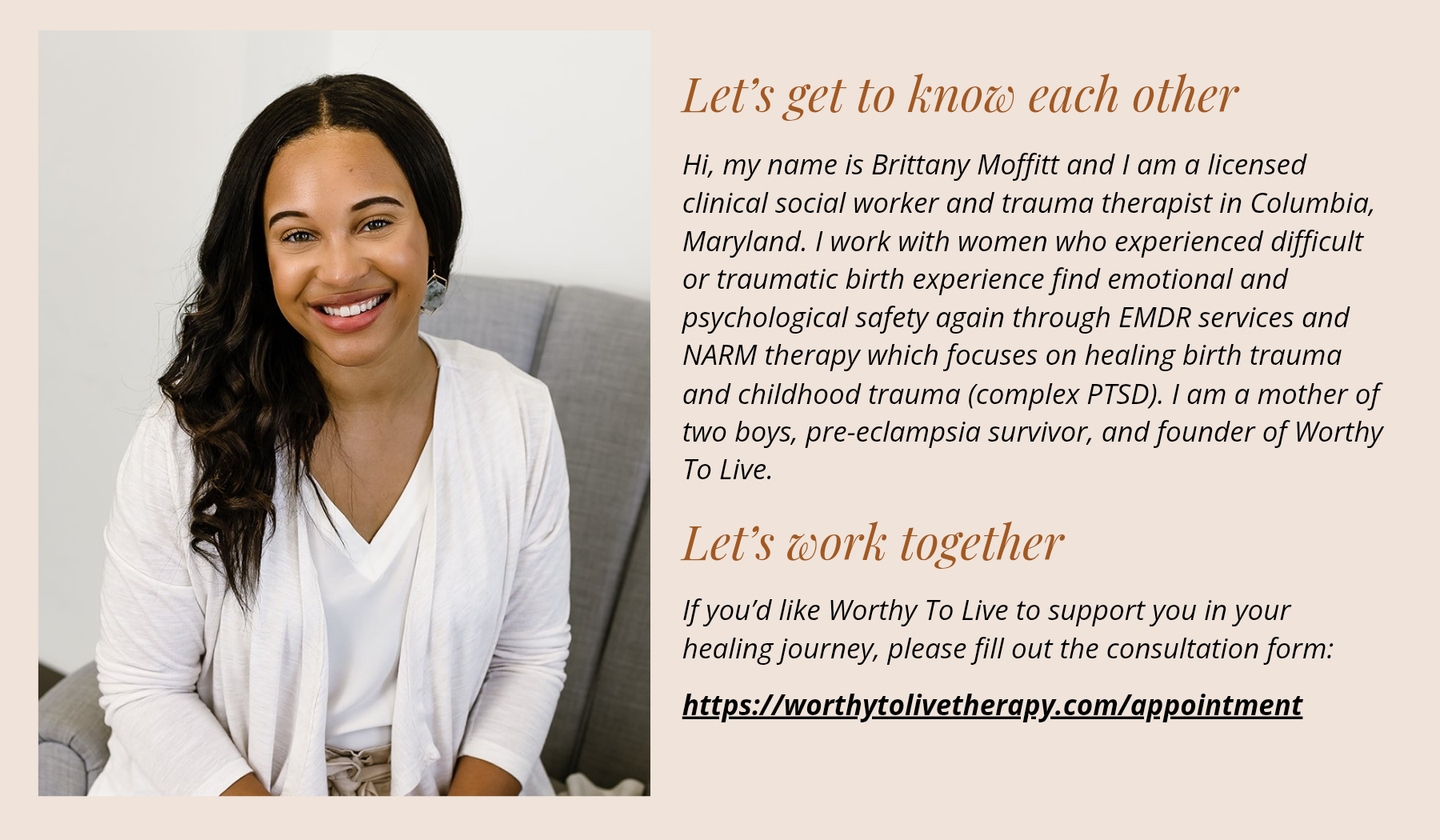
I'm Brittany Moffitt, LCSW-C, a perinatal mental health therapist specializing in pregnancy and childbirth-related trauma. Through therapy, I help women explore the emotional impact of difficult birth experiences and find a path toward healing that respects their individual needs.
You don't have to know exactly what you need before reaching out. We can start there together.
Interested in learning more about birth trauma therapy?
Visit Worthy To Live Therapy to learn more about childbirth trauma therapy and explore whether working with a therapist may be right for you.
Author Bio:
Disclaimer: This blog is for educational and informational purposes only and does not constitute medical or mental health advice or establish a therapeutic relationship. Please consult a qualified healthcare or mental health professional for personalized guidance.
